A Roblox experience rarely begins with a huge feature list. It starts with one clear promise about what players will do, feel, or try to master. This build plan helps beginners narrow an idea, choose priorities, and move from a rough concept toward a playable first version without losing momentum.
Your first goal is not to create a massive world or impress everyone. Your goal is to make the central activity understandable and enjoyable within a session. By defining the intended player and testing a small loop early, you gain evidence for better decisions before time and effort become expensive.
Start With a Focused Concept
Begin with a concept that can be explained in one sentence and demonstrated in one minute. An obstacle course, trading challenge, or cooperative rescue task can provide room for creativity. Ask what makes the activity interesting, then remove features that distract from that promise or require systems you cannot support.
Define the Player and Core Activity
Picture the Intended Player
Describe your intended player before you build content. Consider age range, experience level, available play time, and the reason someone would choose your game over another option. This description is not a restriction; it is a design filter that helps you select mechanics, language, difficulty, and rewards with greater consistency.
Describe the Repeatable Loop
Write the activity as a repeatable action sequence: enter, choose, act, respond, and try again. If the sequence sounds vague, the game probably needs sharper direction. Identify the decision players make often, because that decision should receive the clearest feedback, the fairest challenge, and the strongest connection to your theme.
Build a Small First Version
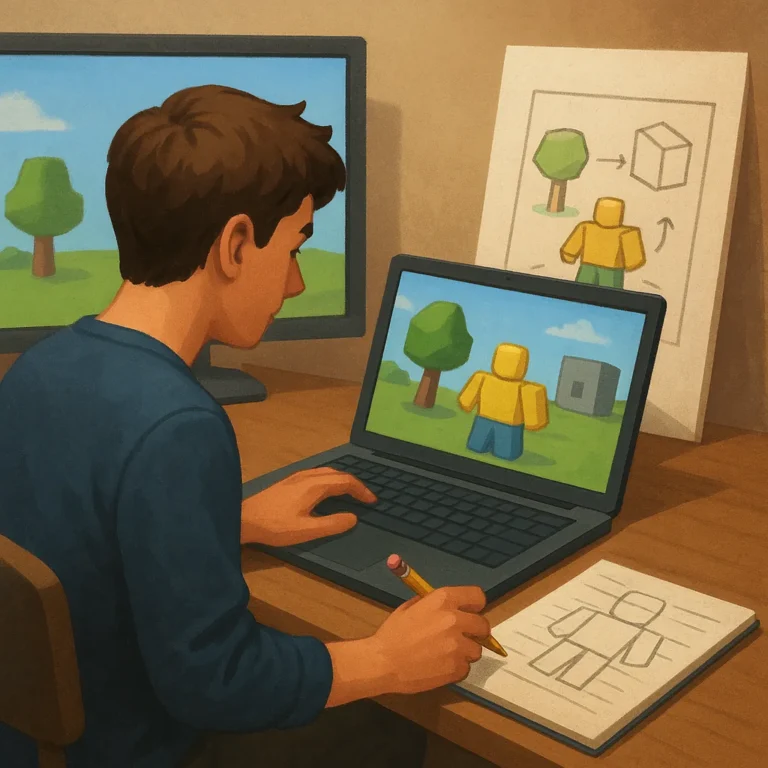
Turn the idea into a small version with one map, one main objective, and only the systems needed to complete a session. Build the path from starting point to meaningful result. A limited scope lets you notice confusing controls, empty spaces, and weak moments while changes are easy to make.
Prototype Before You Polish
Treat the build as a prototype rather than a product. Use temporary shapes, plain interface elements, and placeholder sounds when they help you test movement or timing. The purpose is to answer design questions quickly, not to polish every surface. Replace temporary work only after the underlying activity proves worthwhile.
Test the Main Gameplay Loop
Play the prototype from a fresh start, then watch someone else attempt it without coaching. Note where the player hesitates, misunderstands an objective, or stops caring. Resist the urge to explain everything during testing. Confusion is evidence, and repeated confusion usually points to a problem in instructions, feedback, or pacing.
Separate observations from guesses when reviewing a test. Record that the player missed the exit before deciding the exit needs a sign. This habit keeps you focused on behavior and prevents solutions. Collect observations across sessions because reactions may reflect mood, familiarity, or a mistake rather than a design flaw.
Improve With Deliberate Priorities
Improve the experience in an order that protects the loop. Fix blockers first, clarify goals second, adjust difficulty third, and add visual detail only when it supports understanding or atmosphere. After each change, test the loop. Small, measured revisions reveal which improvements matter and keep the project from becoming tangled.
Plan future features in a backlog, but do not treat each suggestion as a promise. Rank ideas by player value, development effort, and relationship to the central activity. A feature deserves attention when it clearly strengthens the experience. Otherwise, save it later and protect the quality of what already works.
Plan Return Value and Polish
Think about why a player would return after the first session, without relying on endless rewards. A next goal, satisfying mastery path, or changing challenge can create a reason to continue. Retention begins with a valuable experience, so first improve clarity and enjoyment before adding timers, currencies, or complicated progression.
Polish Repeated Moments
Polish the moments players see repeatedly: spawning, moving, completing an objective, failing, and starting again. Consistent naming, readable signs, responsive controls, and useful sound cues can make a modest project feel intentional. Polish should remove friction rather than hide weak design, so revisit the loop whenever decoration begins taking priority.
Prepare for Sharing and Growth
Before sharing widely, check the path from joining to leaving. Confirm that instructions appear at the time, objectives can be completed, resets behave predictably, and players are not trapped by missing objects or broken states. Test on the devices your audience uses, because controls and performance can change the experience.
Invite focused feedback with specific questions instead of asking whether people like the game. Ask where they felt lost, which moment felt strongest, and what they expected to happen next. Compare comments with observed behavior, then choose one or two changes. A manageable feedback cycle turns outside reactions into direction.
Keep the project small enough to finish, but ambitious enough to teach you something. Each completed version gives you better judgment about scope, structure, and player needs. When the core experience works, expand with purpose rather than pressure. That steady process can turn a promising idea into a Roblox game people understand, enjoy, and remember.