Planning gives a Roblox game a usable direction before building turns ideas into tasks. It helps you decide what players should feel, do, and remember, while exposing confusing assumptions early. A short plan cannot guarantee success, but it can make experiments cheaper, decisions clearer, and revisions more purposeful as development continues for the team.
Thoughtful preparation also connects daily building choices with a creator’s larger goal. You can choose a manageable audience, protect time for learning, and recognize which features deserve attention first. That discipline matters whether you are making a small social experience, an obstacle course, or a deeper adventure with several systems over time.
Set a Clear Purpose for the Game
Begin by writing one sentence that describes the intended player experience. Avoid listing every feature in that sentence; focus on the promise, such as relaxed cooperation, tense competition, creative expression, or satisfying discovery. This statement becomes a filter, helping you reject attractive ideas that would pull the project away from its identity early on.
Next, define the audience you can realistically serve during the first release. New creators often describe an audience too broadly, then design conflicting experiences for everyone. Instead, identify players by interests, patience, play style, and preferred session length. A focused audience makes testing more useful because feedback comes from people the game intends to help.
Define Success Signals
Turn the purpose into a few observable signals of success. Players might complete a challenge without confusion, return because each session feels rewarding, or cooperate long enough to solve a shared problem. These signals are not promises about popularity; they are practical questions that let you judge whether a prototype delivers the experience you planned.
Keep the statement visible while you choose tools, create assets, and review playtests. When a proposed addition cannot support the player promise, place it aside rather than forcing it into the first version. This habit protects coherence and prevents the project from becoming a collection of impressive parts that never combine into satisfying play consistently.
Identify the Core Gameplay Loop
The core gameplay loop is the repeated sequence that gives each session its shape. Describe what invites a player to act, what action they take, what feedback follows, and what encourages repetition. If you cannot explain that sequence simply, adding more locations, badges, or effects will probably hide a design problem instead of solving it.
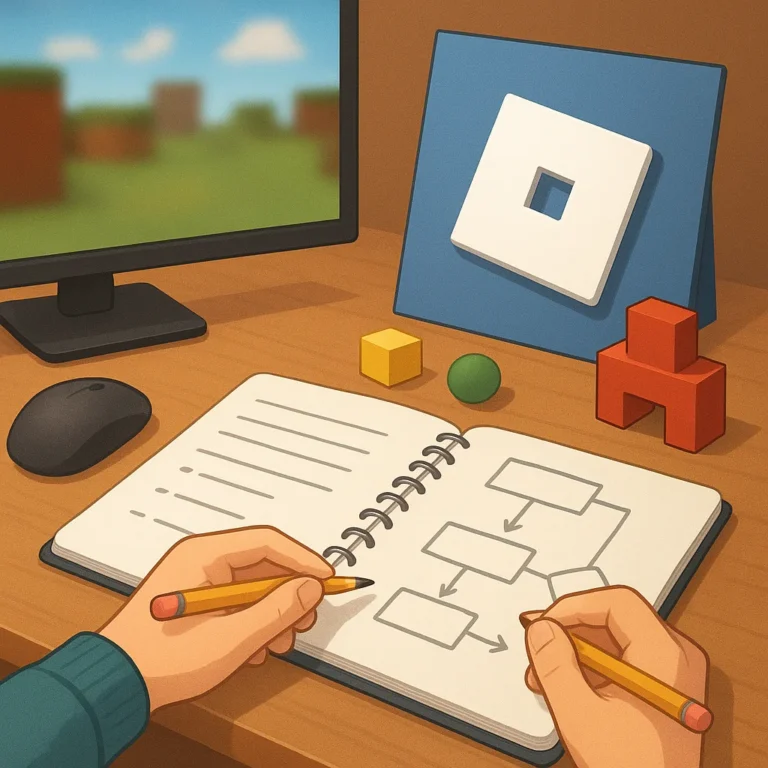
Map the loop with a small written or visual flow before scripting it. Mark the player’s starting state, decision point, reward, and next goal, then note where uncertainty or boredom could appear. This map encourages useful questions: Is the choice meaningful? Does feedback arrive quickly? Can a newcomer understand the next step?
Test the Loop Early
Build the smallest playable version that demonstrates the loop, even if its art, interface, and setting look temporary. Ask testers to describe what they expected before explaining your intentions. Their pauses, wrong turns, and repeated questions reveal friction that a private creator may overlook. Fix the clearest obstacle before polishing secondary details.
Repeat that test after meaningful changes, but compare observations rather than chasing every opinion. A strong loop should become easier to understand without losing its central appeal. Record what changed, which players were tested, and what evidence supported the decision. This lightweight record keeps revisions connected to purpose instead of personal preference.
Separate Essential from Optional Features
Feature lists grow quickly because every idea seems exciting in isolation. Divide them into essentials, useful enhancements, experiments, and future possibilities. An essential feature supports the core promise or prevents a serious usability problem. Everything else must earn its place by improving the loop, clarifying the experience, or providing evidence that players want it.
Use a priority table with simple columns for player value, development effort, risk, and learning potential. High value with low effort deserves early attention, while high risk deserves a small experiment before a full commitment. The table does not replace judgment; it makes tradeoffs visible when enthusiasm, deadlines, and competing suggestions begin to influence decisions.
Create a Realistic Development Schedule
Translate priorities into milestones that produce something testable, not merely a long list of private tasks. Set a near-term checkpoint for the core loop, another for a playable environment, and later checkpoints for refinement. Each milestone should have a clear result, an owner if others help, and a decision about what happens next.
Work backward from the time you can consistently give the project, including school, work, family, and recovery. Leave room for debugging and revision because first attempts rarely behave as expected. A modest weekly commitment that survives busy periods is more valuable than an ambitious schedule that repeatedly collapses and forces you to restart.
Use Planning to Guide Sustainable Monetization
Monetization should follow a useful player experience rather than rescue an unfocused project. Decide what value players receive before considering optional purchases, passes, or cosmetic support. Check whether each idea fits the game’s promise, remains understandable, and avoids pressuring players who simply want to participate. Trust grows when the exchange feels clear and fair.