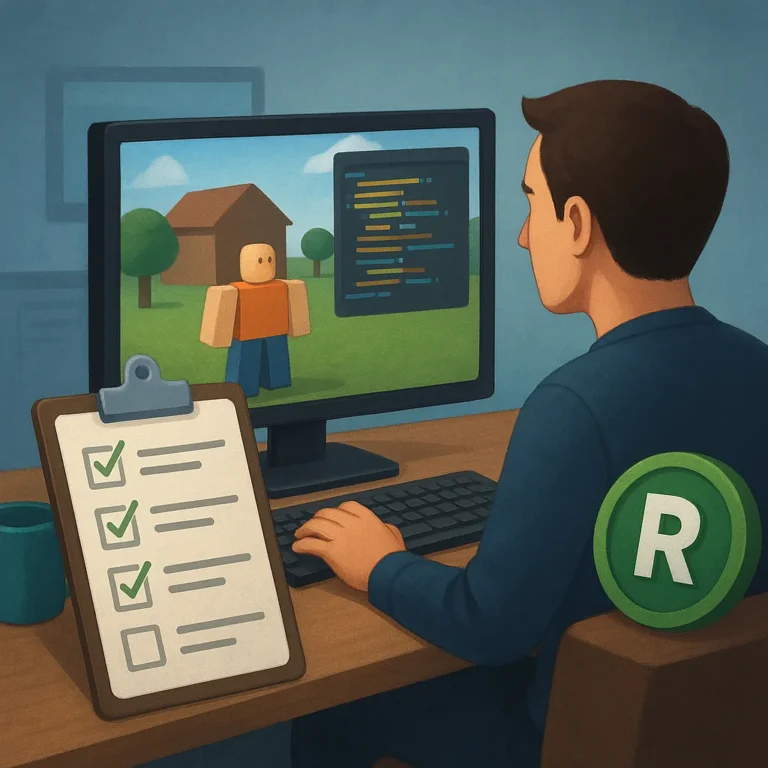
Roblox Game Creation Checklist for Building Toward Legitimate Robux
Use this checklist to move from a promising Roblox concept toward a responsible, playable product. Strong Robux potential begins with clear design, useful testing, and respect for the people who choose to spend time in your game. Treat each checkpoint as a question, not a promise of guaranteed earnings.
Work through the sections in order, but return to earlier decisions whenever testing reveals a weakness. A compact game with a memorable loop can serve players better than an oversized project that feels unfinished. Your aim is to create lasting value, learn from evidence, and build trust before asking anyone to buy.
1. Confirm the Core Idea
Write the central promise in one plain sentence, then check whether a new player would understand the goal within the first minute. Identify the action players repeat, the feeling you want to create, and the reason they might return. If the answer sounds vague, simplify the concept before adding features.
Define a small audience instead of trying to satisfy every possible player. Consider age-appropriate interests, expected session length, device limits, and the skill level required. Sketch the first five minutes as a simple journey: arrival, explanation, first success, meaningful choice, and a reason to continue. This sequence exposes confusion early.
2. Build a Focused Playable Version
Use a written feature list to protect the central loop from distraction. For every proposed addition, ask whether it improves understanding, play, social connection, or fair progression. Park attractive ideas that do not serve the current build. A focused scope saves time, makes testing clearer, and gives your game a stronger identity.
Build and Test the Slice
Create the smallest version that lets someone experience the main promise from start to finish. Include only the movement, interaction, feedback, and progression needed to make the loop understandable. Avoid polishing menus before the core activity works. A playable slice gives you something concrete to test and prevents assumptions from guiding months of work.
Test the first build with players who did not help make it. Watch where they hesitate, skip instructions, repeat mistakes, or ask questions your interface should answer. Resist the urge to explain every problem while observing. Afterward, group findings by severity, fix the largest obstacles, and test the same journey again.
3. Improve Usability and Reliability
Keep performance in the checklist from the beginning. Check loading time, memory use, touch controls, camera behavior, sound levels, and readability on smaller screens. Remove effects that create delay or visual clutter. A game that runs smoothly across realistic devices feels more welcoming and gives players a fair chance to judge its actual design.
Make the First Session Clear
Add feedback for every important action so players know what changed and why it matters. Use readable prompts, consistent sounds, visible rewards, and calm error messages rather than unexplained punishment. Let players recover from early mistakes. Clarity does not remove challenge; it ensures that challenge comes from decisions instead of confusing presentation.
4. Review Safety and Transparency
Explain what the game collects, what purchases do, and where players can get help before they make a decision. Keep descriptions accurate, avoid pressure tactics, and never disguise a cost behind confusing language. Clear information protects younger audiences, supports informed choices, and makes your creator relationship more trustworthy over time.
Build reporting and moderation paths that people can find without leaving the experience. State community expectations in friendly language, respond consistently, and review problems before they grow. Protect personal information, avoid requesting unnecessary details, and teach collaborators the same standards. Safety is not a badge added at launch; it is daily maintenance.
Be Precise About Earnings
Describe Robux possibilities as outcomes that depend on player interest, retention, quality, and platform rules, never as guaranteed results. Separate earned revenue from speculative hopes, and keep records for decisions about pricing. Responsible language helps families and players understand uncertainty while giving your team a healthier foundation for long-term work.
5. Check Whether Monetization Adds Value
Review each paid feature by asking what useful experience it provides, not simply how much it can charge. Purchases should be understandable, optional where practical, and consistent with the game’s promises. Avoid withholding basic usability or using urgency to rush a decision. Value-based design gives players a reason to return even when they spend nothing.
Compare pricing with the time, creativity, and support behind the feature, then ask whether the offer feels fair beside free play. Test descriptions with people who were not involved in planning them. If an offer creates confusion, resentment, or accidental purchases, revise it before promotion. Trust is more durable than a short spike.
6. Plan Continued Improvement
Turn feedback into a release plan with priorities, owners, and realistic dates. Separate urgent fixes from experiments, document why a change was made, and decide how you will judge its effect. Share meaningful updates without promising perfection. A visible improvement cycle reassures players that their reports matter and keeps the team learning.
Revisit this checklist after launch, after major updates, and whenever player behavior changes unexpectedly. Celebrate evidence of better understanding, smoother sessions, safer interactions, and stronger community trust. Remove features that no longer help, repair weak foundations, and keep studying the craft. Sustainable Robux earnings follow value; they do not replace it.